Blog · · 11 min read
Agent rollout strategy: from shadow mode to bounded autonomy
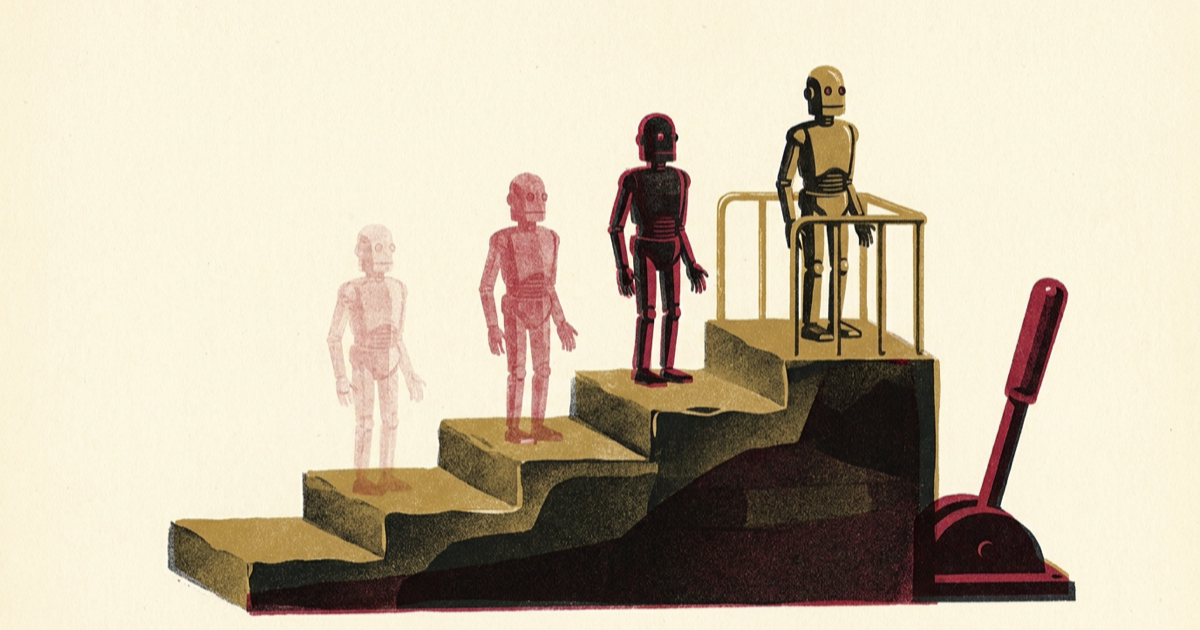
An agent rollout strategy goes wrong when a team jumps from a convincing demo to live write access. The model, tools, permissions, and interface all change at once. When something fails, nobody can tell which change caused it or how far the damage spread. A safer rollout moves one product workflow through five stages: offline replay, shadow mode, suggestions, approval-gated actions, and bounded autonomy. Set entry criteria, exit evidence, and rollback behavior for every stage. Microsoft recommends controlled testing followed by gradual increases in responsibility. This lets you test real work without making customers part of an uncontrolled experiment.
The five-stage rollout in one view
Roll out one workflow at a time. An account lookup might run autonomously while a refund still needs approval. A drafted reply might reach suggestion mode while account deletion remains disabled.
| Stage | What the agent sees | What the agent can change | Required evidence before promotion |
|---|---|---|---|
| 1. Offline replay | Historical, sanitized cases | Nothing | Reproducible task results and known failure categories |
| 2. Shadow mode | Live inputs copied from the product | Nothing | Stable comparisons with the current workflow and no policy bypass |
| 3. Suggestions | Live user context | Drafts that a user must submit | Useful acceptance, edit, and rejection evidence by risk class |
| 4. Approval-gated actions | Live context and eligible tools | Only the exact action a person approves | Correct authorization, durable approvals, safe retries, and usable recovery |
| 5. Bounded autonomy | Live context within a defined scope | Low-risk actions inside hard limits | Sustained outcome quality, reliable alerts, and tested rollback |
Anthropic recommends starting with the simplest solution and adding complexity only when the task requires it. The same rule works for autonomy. Keep a workflow at its current stage until the next stage solves a specific product problem and the team has evidence that its controls work.
Why agent rollouts become risky
Autonomy has several independent controls:
- which users and tenants can invoke the workflow
- which records the agent can read
- which tools it can call
- which arguments and value ranges are allowed
- whether a person must approve the action
- how many actions the agent can take in one run
- what the product does after a timeout or partial failure
Enabling every control together ruins the experiment. If customer outcomes get worse, the cause could be retrieval, model choice, prompt logic, tool design, authorization, or recovery behavior. The team has no clean comparison and no narrow rollback.
A fluent model response is also a poor success metric. It does not prove that the proposed action was allowed, happened once, or improved the customer's outcome. Rollout evidence has to connect each decision to product records, tool execution, and the result the customer experienced.
Approval controls whether an action may start. It cannot make the tool idempotent, repair a partial write, or resolve a timeout after a remote system may have committed. Those protections belong in the execution path.
Define the operating envelope first
Before stage 1, write a rollout record for one workflow. Keep the scope small enough that one owner can answer every field:
workflow: issue_standard_refund
eligible_users: [support_lead, support_agent]
eligible_tenants: pilot_group
read_scope: [order, payment_status, refund_policy]
write_tools: [create_refund]
value_limit: 100
approval_required: true
max_actions_per_run: 1
max_runtime_seconds: 30
rollback_flag: agent_refund_enabled
owner: support_platform
Enforce this record in application code or a policy layer before the tool runs. A prompt cannot reliably enforce deployment policy. Microsoft advises least-privileged access and human oversight for critical actions. Explicit product fields keep those controls in place when a model, prompt, or interface changes.
Classify each tool by what happens if it makes a mistake:
| Tool class | Meaning | Typical rollout ceiling |
|---|---|---|
| Read-only | Fetches data without changing product state | Bounded autonomy after access checks pass |
| Reversible write | Changes state that the product can restore reliably | Bounded autonomy within strict limits |
| Consequential write | Moves money, sends a message, changes access, or starts an external process | Approval until recovery is proven |
| Irreversible action | Cannot be undone after dispatch | Approval may remain permanent |
This is a policy decision, not a model capability test. A perfect tool choice can still be too consequential for autonomous execution.
Stage 1: replay historical cases offline
Build a fixed set of past cases before exposing the agent to live traffic. Include routine work, known failures, policy boundaries, incomplete records, and cases that required escalation. Remove secrets and use tenant-safe fixtures.
Test the whole proposed decision path rather than grading only the final sentence. Capture:
- whether the agent chose the correct workflow
- which tools it proposed
- whether the arguments matched product records
- whether policy allowed the action
- whether the agent stopped or escalated when required
- the expected product outcome
Keep production write clients out of the replay environment. Replace tools with deterministic fixtures that record each proposed call. The same cases can then compare prompt, model, and policy versions without changing real data.
Write the exit criteria before running the set. They should reflect the product's actual risks: no cross-tenant access, no forbidden tool choice, no write proposal without the required evidence, and correct escalation for every high-risk fixture. One severe policy violation should block promotion even when the average score looks good.
Stage 2: run shadow mode on live inputs
In shadow mode, the agent receives a copy of live input and produces a decision, but the current product workflow remains authoritative. The agent cannot change product or external state. Brightlume describes shadow mode as parallel agent execution that does not influence the live outcome.
Run shadow work on a separate queue or event subscriber so it cannot delay the customer request. Strip credentials from copied context and give the agent read-only or simulated tools. Label every trace as shadow traffic. Operators should never have to guess whether a recorded action was real.
Compare the agent's proposal with the actual workflow result. Classify disagreement by cause:
- missing or stale context
- wrong workflow selection
- incorrect tool or arguments
- policy disagreement
- human exception handling
- an error in the current workflow
The existing process may itself be inconsistent. Review a sample with the workflow owner instead of treating every disagreement as an agent failure. The review should establish what the desired outcome should have been.
An Ask HN author asking about production tool permissions specifically asks how teams move enforcement from audit-only or shadow mode to active enforcement. This is one practitioner's report, not adoption data. It captures the operational test for this stage: what evidence is strong enough to turn observation into control?
Promotion requires representative live conditions, resolution of severe disagreements, and proof that the shadow path cannot execute writes.
Stage 3: expose suggestions without execution
Suggestion mode puts the output in front of a user while leaving the product's existing submit action intact. The agent might draft a support reply, propose an account update, or prefill a refund form.
Show the source records and intended effect. Give the user clear ways to accept, edit, reject, or escalate. Save the original proposal separately from the submitted result. That comparison reveals whether the draft was useful or whether the user quietly corrected it.
Acceptance rate does not tell the whole story. A user might accept poor output to save time, or reject correct output because it arrived too late. Track changed fields, rejection reasons, time to completion, downstream corrections, and policy exceptions. Break the results down by workflow and consequence class.
Users must be able to finish the task without the agent. If it times out, produces invalid output, or lacks context, return to the normal form instead of blocking the workflow.
Exit criteria should specify which suggestions qualify for action. A support reply may advance while the refund amount remains manual. Different outputs from the same agent can stay at different stages.
Stage 4: require approval for exact actions
Approval-gated mode lets the agent prepare a real tool call, pause, and ask an authorized person to approve, modify, or reject that exact action. The OpenAI Agents SDK human-in-the-loop flow documents this pause, approval, and resume sequence.
Bind approval to immutable fields: tenant, acting user, tool, canonical arguments, policy version, and expiration time. If one field changes, create a new approval request. Never approve a natural-language summary and then execute different structured arguments.
Persist the pending action before notifying the approver. It should survive a process restart and resume once. A useful decision record contains:
{
  "action_id": "act_1042",
  "tenant_id": "tenant_17",
  "tool": "create_refund",
  "arguments_hash": "sha256:recorded-before-approval",
  "policy_version": "refund-v4",
  "status": "awaiting_approval",
  "expires_at": "2026-07-15T15:00:00Z"
}
Record the reason for a rejection and return control to the user. If the approver modifies the arguments, validate them again and request another approval when the consequence or scope changes. Expire timed-out requests rather than leaving a reusable approval token.
Before promotion, test authorization, restart and resume, duplicate callbacks, expired approvals, and ambiguous tool timeouts. A high approval rate does not cover any of those failure paths.
Stage 5: grant bounded autonomy
Bounded autonomy removes per-action approval only inside a defined low-risk envelope. It does not grant unrestricted access to every tool.
Begin with selected tenants, eligible users, one workflow, a small consequence range, and one action per run. Keep hard limits outside the model. The execution layer should reject any proposal whose user, tenant, tool, arguments, value, rate, or run budget falls outside policy.
Use canary cohorts and feature flags to change exposure independently. Separate flags for workflow selection, suggestions, approval-gated writes, and autonomous writes let an operator reduce autonomy without disabling the entire feature.
Move into this stage only after the workflow has sustained good product outcomes, no unresolved severe policy events, reliable recovery, and a named on-call owner. Continue sampling completed actions. A new customer mix, tool schema, or model version can invalidate earlier evidence.
Implement the agent rollout strategy as policy
Store the current stage by workflow and tenant cohort. Check it at each execution boundary rather than relying on the interface to hide a button.
handle_agent_proposal(proposal, actor, tenant):
  policy = load_rollout_policy(proposal.workflow, tenant)
  authorize(actor, proposal.tool, proposal.arguments, policy)

  if policy.stage == "offline" or policy.stage == "shadow":
      record_simulation(proposal)
      return no_effect()

  if policy.stage == "suggestion":
      return render_editable_draft(proposal)

  if policy.stage == "approval":
      return create_durable_approval(proposal, actor, policy)

  if policy.stage == "bounded_autonomy":
      enforce_limits(proposal, policy)
      return execute_idempotently(proposal)

  deny("unknown rollout stage")
When an operator rolls back, the policy should lower the stage immediately for new work. In-flight actions need their own rule. Cancel work that has not been dispatched, finish recording a known completed action, and reconcile an unknown outcome. Retrying an ambiguous write because the feature flag changed can duplicate the effect.
Trigger automatic rollback for severe policy violations, cross-tenant access, unauthorized tool attempts, duplicate effects, or missing audit records. Slower quality or latency drift can pause promotion while the owner investigates. Keep those two responses separate so a hard safety failure does not wait for a review meeting.
Handle failures without hiding them
Give every stage an explicit outcome such as completed, rejected, cancelled, retryable, failed, unknown, or needs_human. Map that outcome into the product's existing alerts and workflow status.
A shadow or suggestion failure should leave the normal customer path available. An approval failure should keep the action unexecuted and visible to the requester. An autonomous failure should stop within fixed action, time, and retry budgets.
Record partial work separately from total failure. If one tool succeeds and the next fails, preserve the completed effect and start a product-defined compensation or human recovery path. The model cannot know whether a remote write committed after the connection timed out.
Lowering a feature flag only prevents future autonomous actions. It does not undo messages already sent or records already changed. Name the recovery owner for every consequential tool before that tool moves beyond suggestions.
Verify the rollout before each promotion
Run these checks against the persisted policy and execution path:
- A stage 1 replay cannot reach a network write client.
- Shadow traffic is labeled and cannot acquire write credentials.
- A stage 3 suggestion cannot execute through a crafted client request.
- Approval is bound to exact arguments, actor, tenant, and policy version.
- Replaying an approval callback executes the logical action at most once.
- An expired or rejected request cannot resume.
- A bounded autonomous call outside value or rate limits is denied.
- Lowering the stage blocks new autonomous work immediately.
- A timeout after remote commit enters reconciliation instead of blind retry.
- Alerts identify the workflow, cohort, action, and current owner.
Rehearse the operator path too. The on-call person should be able to identify the active stage, disable autonomous writes, locate in-flight actions, and find the recovery owner without editing a prompt or deploying code.
Common rollout mistakes
Promoting the agent as one unit gives low-risk and consequential tools the same access. Advance each workflow and tool according to its own failure cost.
Average quality can hide a severe failure. Cross-tenant access or an unauthorized payment blocks promotion even when most cases pass.
Model output is only one part of the result. Production evidence must cover authorization, tool execution, retries, recovery, and the final product outcome.
A manual kill switch is not a rollback plan until operators have rehearsed it, decided what happens to in-flight work, and assigned recovery owners.
Shadow infrastructure is unsafe if it can acquire real write credentials. The execution boundary must prevent effects; a prompt instruction is not enough.
What to do next
Start the agent rollout strategy with one existing workflow. Write its operating-envelope record today, put it in offline replay, define one severe failure that blocks promotion, and name the feature flag that returns it to the previous stage. Exercise that rollback path before discussing autonomous execution.
References
- Building effective agents. Anthropic supports starting with the simplest sufficient system and increasing agentic complexity only when the task justifies it.
- Design autonomous agent capabilities. Microsoft supports controlled testing, gradual rollout, least privilege, human oversight for critical actions, and incremental expansion of responsibility.
- Human-in-the-loop in the OpenAI Agents SDK. OpenAI documents pausing for approval and resuming tool execution.
- Shadow Mode Rollouts for AI Agents. Brightlume provides a concrete description of parallel shadow execution that does not influence production outcomes.
- Ask HN: enforcing permissions for AI agent tool calls in production. This practitioner report asks how to move from audit-only or shadow policy checks to active enforcement.