Blog · · 9 min read
AI Agent Data Privacy: Context, Memory, and Traces
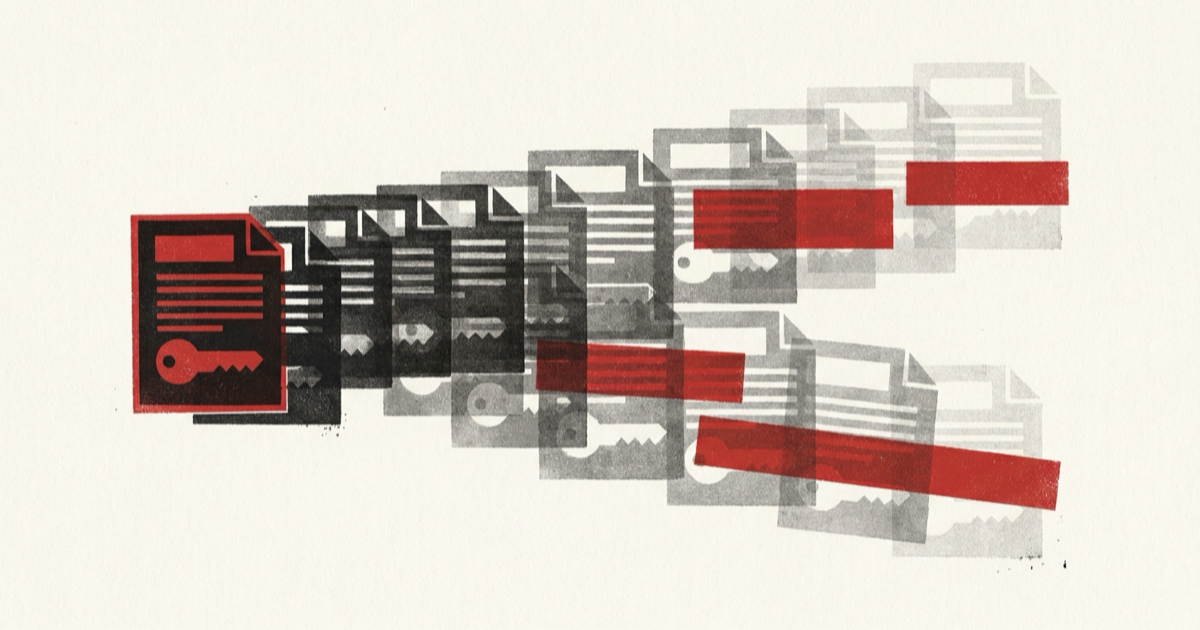
An agent creates working copies of the product data it reads.
A customer record may become prompt context, a tool argument, a checkpoint, a vector-memory document, a trace span, or a handoff to another agent. Deleting the original record does not automatically find those copies. Restricting the source row does not automatically protect a trace that already left the application.
One product action can create several data lifecycles, while users still expect one privacy policy.
A generic compliance checklist will not track those copies. Product teams need a technical contract that follows data through model calls, tools, memory, telemetry, and deletion. Microsoft’s agent data-architecture guidance recommends governed data foundations, source-system controls, and lineage for retrieved data (Microsoft Learn).
Why this is hard in an existing product
Most applications already know who owns a record, who can read it, and when it should be deleted. Those rules become harder to follow when an agent runtime produces derived copies.
The same email address can land in systems with different owners and retention periods. A support ticket may have a long retention period, while the prompt assembled from it should exist for one run. A trace may be useful for short-term debugging, while long-term memory should contain only an approved, non-sensitive preference. A handoff may cross a service or regional boundary.
Runtime defaults complicate the job. The OpenAI Agents SDK, for example, enables tracing by default and records model generations, tool calls, handoffs, and other run events. It exposes controls for sensitive model and function data and notes that tracing is unavailable under Zero Data Retention (OpenAI Agents SDK). The application still has to decide what data may reach the runtime.
Configuration flags cover only part of the policy. One Agents SDK issue describes tool inputs, outputs, and model generations entering traces by default, with a risk of accidental PII or confidential-data capture (GitHub issue #2393). Another reproduced function-tool exception text reaching traces even when sensitive function tracing was disabled (GitHub issue #3110). The second issue is closed. Teams should still test success and error paths at the export boundary.
Target architecture
Use a data-copy register to govern each derivative of a product record:
| Surface | Purpose | System owner | Minimum controls | Deletion key |
|---|---|---|---|---|
| Product record | Authoritative business state | Product service | Existing RBAC, tenancy, retention | Record and subject ID |
| Assembled context | Complete one run | Agent gateway | Field allowlist, minimization, short TTL | Run ID plus source refs |
| Model request | Generate or choose an action | Model gateway/provider | Approved fields, region and retention policy | Provider request ID |
| Tool input/output | Read or change product state | Tool service | User authorization, schema limits, output filtering | Action ID plus source refs |
| Checkpoint | Resume a run safely | Runtime store | Encryption, tenant scope, expiry | Thread or task ID |
| Long-term memory | Reuse an approved fact | Memory service | Purpose tag, provenance, expiry | Subject ID plus source refs |
| Trace | Debug and evaluate behavior | Telemetry system | Pre-export redaction, access control, short retention | Trace ID plus source refs |
| Agent handoff | Delegate bounded work | Receiving service | Contract filtering, tenant and purpose propagation | Parent run ID |
The register is a policy design artifact. A team should be able to answer four questions for every row:
- Why does this copy exist?
- Which fields are allowed?
- When does it expire?
- How does a user deletion reach it?
Represent those answers in code so the same rule can govern context assembly, storage, and export:
type DataClass = "public" | "internal" | "personal" | "restricted";

type AgentDataPolicy = {
  purpose: "support_reply" | "account_change" | "quality_review";
  allowedFields: string[];
  allowedRegions: string[];
  retentionHours: number;
  memoryAllowed: boolean;
  traceMode: "metadata_only" | "redacted" | "disabled";
  sourceRefs: Array<{ subjectId: string; recordId: string }>;
};
Set privacy policy at the product layer instead of letting each framework define its own version. Resolve that policy before a run starts, then pass the relevant parts to the model gateway, tool layer, checkpoint store, memory service, and telemetry exporter.
Step-by-step implementation
1. Inventory source data and every derived copy
Begin with one real workflow. Follow a support-agent request from the ticket database to context assembly, the model request, retrieval calls, write tools, checkpoints, memory, traces, and analytics.
Record the source field, data class, subject, tenant, purpose, destination, region, retention period, and deletion mechanism. Inspect error payloads and retry queues too, since either may contain the full failing input.
Atlan’s current privacy guide covers the agent-specific risks of persistent memory, aggregation, cross-agent propagation, purpose drift, retention, and erasure (Atlan). Use those categories as a discovery checklist, then map them to your own product.
2. Minimize before the model or tool boundary
Trace redaction cannot retract data already sent to a model or tool. Build context from a field allowlist tied to the action’s purpose.
A support-summary task may need the ticket body and plan tier. It probably does not need a billing address, authentication events, or every historical ticket. Replace identifiers with stable opaque references when the model only needs correlation. When possible, compute narrow facts in trusted code, such as payment_overdue: true, instead of sending the underlying transactions.
Apply the same rule to tool output. A find_customer tool should return the fields needed for the next decision, not the entire database row because it is convenient.
3. Preserve authorization, tenancy, and purpose
Authorization remains a separate control. Resolve user and tenant permissions before retrieval and again before a side effect. Carry the product identity through every tool call rather than granting the agent a shared superuser credential.
Microsoft’s guidance recommends preserving access controls from source systems and retaining ownership and lineage metadata in retrieval results (Microsoft Learn). That gives the runtime enough information to reject stale, cross-tenant, or out-of-purpose context instead of trusting whatever a retrieval layer returns.
Purpose should travel with the request too. Data approved for support_reply should not silently become training material or long-term personalization memory. Treat a purpose change as a new policy decision.
4. Redact telemetry before export
Trace metadata can usually answer operational questions without storing raw prompts and tool payloads. Keep action IDs, tool names, duration, token counts, outcome classes, policy decisions, and source-reference hashes. Redact or suppress the sensitive body.
Microsoft’s MLflow guidance demonstrates client-side PII redaction before trace data leaves the application and distinguishes trace redaction from controls that block sensitive input from reaching a model or tool (Microsoft Learn). Use the exporter as the final enforcement point for telemetry policy. Earlier controls still need to keep sensitive data away from the model and tools when the purpose does not require it.
Test normal tool results, model output, validation failures, exceptions, retries, cancelled runs, and handoffs. Fail closed for restricted fields. If redaction fails, export metadata-only telemetry rather than the payload.
5. Make retention and deletion executable
A retention policy that exists only in documentation will drift. Store an expiry timestamp and policy version with every checkpoint, memory item, trace, and queued payload. Enforce expiry in the storage layer, then verify it with a sweeper and metrics.
Index derived copies by opaque subject and source-record references. When a deletion request arrives, publish a deletion command to each data-owning service. Each service should return a receipt containing the policy version, affected object count, completion time, and any legal hold. The receipt should not copy the deleted content.
Deletion is complete only after checking primary storage, vector indexes, checkpoints, traces, dead-letter queues, caches, and provider-side artifacts covered by your contract. Backups may require a separate expiry and restoration procedure; document that boundary instead of claiming instant erasure everywhere.
6. Constrain agent handoffs
A handoff is a new disclosure decision. Send the receiving agent a purpose-specific envelope instead of the parent agent’s entire context window.
Pass tenant, subject references, purpose, policy version, allowed fields, expiry, and a parent run ID. The receiver must reject fields outside its contract and must not extend retention without an explicit policy decision. Record the handoff as lineage so deletion can cross service boundaries.
Failure modes to avoid
Deleting only the source record
The product database is clean, but a vector index, trace, or checkpoint still contains the old value. Fix this with source references, a deletion fan-out, service receipts, and an orphan scan.
Redacting after telemetry has left the application
A downstream dashboard may hide a field while the raw collector still stores it. Redact at the client-side exporter and restrict the payload before network transmission.
Treating Zero Data Retention as an application-wide guarantee
A provider policy does not delete your checkpoints, memory, traces, queues, or tool logs. Maintain a separate lifecycle for every system in the data-copy register.
Storing PII as a memory key
Emails and names make deletion lookups easy but leak identity into indexes and logs. Use opaque subject IDs, keep the identity mapping in the authoritative product service, and put source references in protected metadata.
Turning the audit trail into a second archive
An audit receipt needs to prove what policy ran and which objects were affected. It rarely needs the original prompt or tool response. Store hashes, identifiers, counts, outcomes, and timestamps instead of sensitive payloads.
Rollout and validation
Roll this out one workflow at a time.
- Map data copies without changing behavior. Assign an owner and retention target to every surface.
- Run the policy engine in report-only mode. Measure disallowed fields, missing source references, and unknown destinations.
- Enforce the policy on new writes. Block restricted fields, require policy metadata, and apply TTLs to new checkpoints, memories, and traces.
- Backfill reliable source references, expire stale data, and quarantine unclassifiable copies for review.
- Use synthetic subjects to test end-to-end erasure across success, exception, retry, cancellation, and handoff paths.
- Move tenant cohorts to enforcement only after deletion and export checks meet the agreed service level.
Track metrics that expose lifecycle failures rather than vanity activity:
- sensitive-field escape rate at model, tool, and trace boundaries;
- percentage of derived objects with subject, source, purpose, and expiry metadata;
- deletion completion time by storage surface;
- orphaned derived copies found after a deletion drill;
- trace exports that fell back to metadata-only mode;
- expired memory or checkpoints still readable;
- handoffs rejected for field, tenant, region, or purpose violations.
Implementation checklist
- Pick one agent workflow and map every data copy.
- Classify fields and define purpose-specific allowlists.
- Preserve user, tenant, source ownership, and lineage.
- Resolve one policy before model, tool, memory, and trace work begins.
- Minimize model context and tool responses before dispatch.
- Redact trace payloads before export and fail closed.
- Store policy version, source references, and expiry with derived data.
- Propagate deletion to checkpoints, memory, traces, queues, and handoffs.
- Return deletion receipts without retaining deleted payloads.
- Test normal, exception, retry, cancellation, and handoff paths.
- Run synthetic deletion drills before broad enforcement.
- Alert on orphaned, expired, or policy-less data copies.
Conclusion
AI agent data privacy becomes manageable when the product owns the lifecycle. The product record stays authoritative, while the run carries its authorization, purpose, and policy version. Memory, checkpoints, traces, and handoffs inherit that policy. Retention and deletion then become operations the team can execute and test.
A working system can show where a person’s data went, why each copy exists, when it expires, and whether a deletion request removed it.
References
- Microsoft Learn: Data architecture for AI agents
- OpenAI Agents SDK: Tracing
- OpenAI Agents SDK issue #2393: Sensitive data included in traces by default
- OpenAI Agents SDK issue #3110: Function tool trace errors ignored the sensitive-data flag
- Atlan: Data Privacy for AI Agents
- Microsoft Learn: Redact PII from traces before export